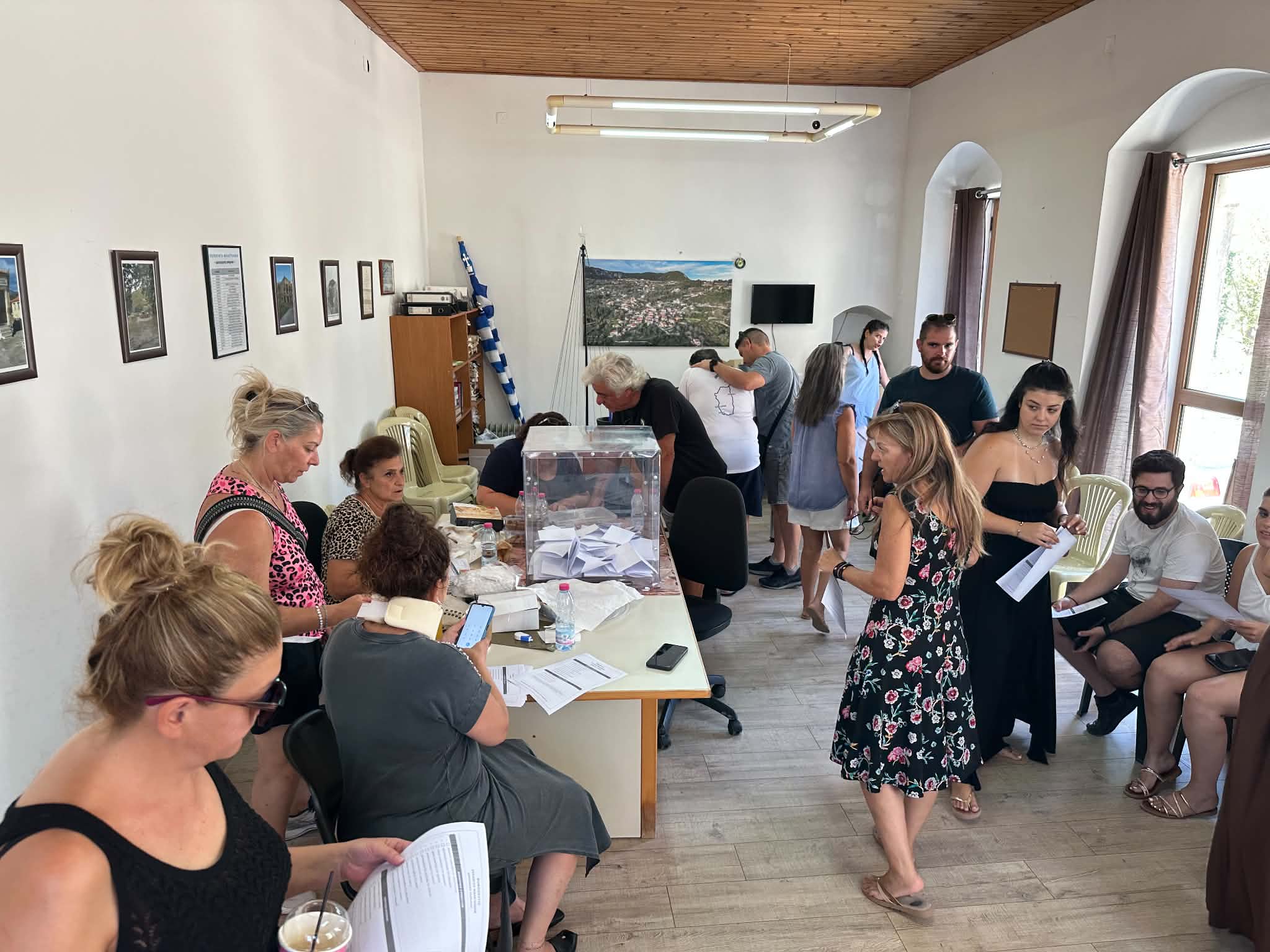
Following the completion of the elections of the Maletianoi Association, the new Board of Directors would like to express its warm and sincere thanks to all members of the Association who participated in the electoral process on Sunday, August 23, 2026.
Your participation, trust, and support are a great honor, but also a significant responsibility for all of us who are taking on the administration of our village Association.
Following the formation of the new Board of Directors, the positions were assigned as follows:
- President: Aspasia Vereteknidi, daughter of Panagiotis
- Vice President: Dimitrios Venizelos, son of Konstantinos
- General Secretary: Sofia Maria Papachatzi, daughter of Achilleas
- Deputy General Secretary: Myrto Kamzola, daughter of Ioannis
- Treasurer: Aikaterini Triantafyllou, daughter of Nikolaos
- Deputy Treasurer: Georgios Kousoulas, son of Ioannis
- Board Member / Curator: Eleftherios Dimos, son of Georgios
At the same time, following the completion of the elections, the Association’s new Audit Committee was also elected and consists of:
- President of the Audit Committee: Anastasia Poulimenou, daughter of Christos
- General Secretary: Iliana Markou, daughter of Christos
- Member: Georgios Chatzigiannis, son of Stavros (inactive member until the Association’s Statutes are amended)
We wish the members of the Audit Committee a successful and productive term and sincerely thank them for their willingness to contribute to the Association.
We would also like to warmly thank everyone who participated in the elections of our Association, and especially those who, although not elected, honored the process with their candidacy and demonstrated in practice their willingness to contribute.
We want and welcome everyone to stand equally alongside us, in a spirit of cooperation and unity, so that together we can contribute to the work, goals, and progress of the Association.
In closing, we would like to make special mention of the Electoral Committee, and in particular Eleni Georgana, Nikoleta Demerouti, and Paraskevi Demerouti, for the exemplary organization and conduct of the electoral process on Saturday, August 22, 2026, and especially on Sunday, August 23, 2026.
The new Board of Directors is committed to working in a spirit of cooperation, transparency, responsibility, and collective effort, with the primary goals of advancing the objectives of the Association, preserving and promoting our history and traditions, and, above all, strengthening the unity of all people of Maletianoi.
The new administration is not the responsibility of the elected members alone.
The Association belongs to all of us.
We sincerely thank you for your trust and support.
With kind regards,
The New Board of Directors
of the Maletianoi Association